
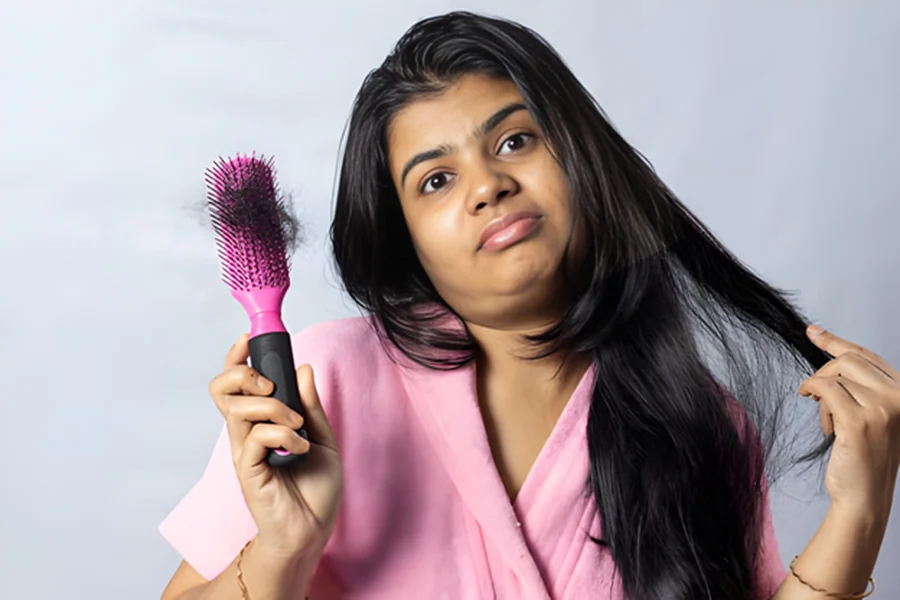
Relaxing textured tresses can feel like a shortcut to easier styling, but it also changes how your mane behaves. So when you notice extra strands in the sink or your ends snapping off, it’s easy to panic and assume you’re dealing with “hair loss.” The truth is: many people with relaxed textured hair are battling breakage, not true shedding from the root. Knowing which one is happening matters, because the fix is completely different. Let’s walk through how to tell shedding from breakage, why relaxed strands often seem stuck at one length, and how to rebuild stronger, healthier growth without stressing your scalp or your schedule.
Contents
Relaxed Hair Extensions: Shedding vs. Breakage After a Relaxer
If you have textured hair, a relaxer works by changing the internal bonds of your strands so they lie straighter. That shift can make your tresses smoother, but it can also make them more fragile if they’re not cared for gently. In that “rebuilding” phase, a low-manipulation option like Relaxed Straight Hair Extensions can help you keep your style while reducing daily tugging and heat on vulnerable strands.
So how do you know if you’re shedding or breaking after a relaxer? Start by looking closely at what you’re losing. Shedding means the strand comes out from the follicle. You’ll usually see a tiny white or dark bulb at one end (the root). Breakage is a snapped piece of strand with no bulb, often shorter than your full length.
Here are quick clues:
- Shedding signs
- Full-length strands with a small bulb
- More hair fall on wash day than usual
- Often linked to stress, hormones, illness, or scalp inflammation
- Breakage signs
- Short, uneven pieces everywhere (sink, floor, pillow)
- Rough ends and frizzy mid-shaft
- Often linked to over-processing, dryness, friction, or heat stacking
A little shedding is normal—most people lose around 50–100 strands a day. But if your relaxed mane is breaking at the mid-shaft or ends, that’s a structural problem you can target with better routines and gentler styling.
Relaxed Lace Front Wig Time: Protective Breaks Without Scalp Stress
When your strands are stressed, one of the healthiest things you can do is reduce how much you touch them. Think of your mane like a delicate fabric: the less you pull, twist, or press with heat, the more time it has to recover. Protective styling isn’t about hiding your hair—it’s about giving your tresses room to heal and retain length.
For many relaxed textured-hair wearers, a breathable Relaxed Straight Lace Front Wig can be a smart break option. It lets you stay polished while keeping tension off fragile areas like the edges and crown, where breakage and thinning often start.
To make protective styling truly protective, keep scalp care front and center. A quick, realistic routine might look like this:
- Cleanse your scalp regularly (even under wigs/styles)
- Use a lightweight, soothing scalp serum if you’re itchy or dry
- Avoid tight caps or glue methods that irritate your skin
- Let your scalp breathe at night when possible
If your scalp feels sore, inflamed, or tender after relaxing, don’t push through it. Scalp irritation can increase shedding, so calming the skin is part of your growth plan.
Why Your Relaxed Tresses Feel Stuck at the Same Length
If your relaxed hair “won’t grow,” it’s usually growing—you’re just not retaining length. Relaxed textured strands are more prone to breakage because the cuticle is lifted more easily after chemical processing. Add frequent heat, rough detangling, or dry air, and your ends can snap off as fast as new growth appears.
Common length-stall culprits include:
- Overlapping relaxers (processing already-relaxed hair)
- Protein loss from chemicals + heat
- Porosity shifts causing moisture to escape quickly
- Friction from cotton pillowcases or tight styles
- Skipping trims until split ends crawl upward
Can relaxed hair grow long if you keep straightening it? Yes—but only if your heat habits are disciplined. Straightening on top of relaxing is a double stressor. If you want length, aim for:
- Lower heat settings
- Heat protectant every time
- Fewer passes with the iron
- Stretch styles (rollers, wraps) between heat days
In short: relaxed hair can thrive, but it needs a “less is more” approach to manipulation.
Stronger Routine, Trim Timing, and FAQs
The best routine for strengthening relaxed textured hair is balance—moisture to keep strands flexible and protein to keep them resilient. Think of moisture as softness and protein as structure. Too much of either can backfire, so rotate them.
A simple weekly blueprint:
- Wash day
- Gentle shampoo focused on the scalp
- Moisturizing conditioner with slip
- Detangle in sections, starting at the ends
- Every 1–2 weeks
- Light protein treatment (not hardcore unless damaged)
- Follow with deep moisture to prevent stiffness
- Midweek
- Water-based spritz + seal with a light oil or cream
- Daily
- Satin bonnet or pillowcase to cut friction
How often should you trim if you’re trying to retain length? Most relaxed hair does well with small trims every 8–12 weeks, depending on how your ends look and feel. Trimming doesn’t stop growth—it prevents splits from traveling upward and stealing your progress. If you heat style often, lean closer to 8 weeks. If you’re low-heat and protective-style heavy, 12 weeks might be enough.
FAQs
Q: My strands are full length but still falling—should I worry?
If you see bulbs on most strands, you’re likely shedding. Track it for 2–4 weeks. If shedding is heavy, sudden, or paired with scalp symptoms, consider a dermatologist visit.
Q: What if I’m shedding and breaking?
That’s common after over-processing or stress. Focus on scalp calm first, then rebuild strand strength with balanced moisture/protein and less heat.
Q: How long does it take to see growth after damage?
You may notice less breakage in 3–6 weeks, but visible length retention often takes 2–3 months of consistency.
Q: Should I stop relaxing completely?
Not necessarily. Many people relax safely. The key is proper spacing (usually 8–12+ weeks), no overlap, and gentle care between services.
Your relaxed textured mane isn’t doomed—it just needs the right diagnosis and a kinder routine. Once you know whether you’re dealing with breakage or true shedding, your path to stronger, longer tresses gets a whole lot clearer.